Saunas for Beginners: How to Use a Sauna Safely and Effectively
There is a reason more homeowners are bringing wellness home. Across Canada and North America, people are investing in spaces that help them slow down, recover, and recharge without leaving their backyard.
Saunas have become one of the fastest-growing wellness additions as homeowners look for simple ways to support relaxation, recovery, and better daily routines. Industry reports show rising demand for residential saunas as wellness-focused home upgrades continue gaining popularity.
We see this shift firsthand. More families are asking questions about creating complete backyard wellness spaces that include hot tubs, swim spas, cold plunges, and saunas. One question comes up almost every time:
How long should you actually stay in a sauna?
The answer is not about endurance. It is not about pushing limits or trying to sit in extreme heat longer than everyone else. Sauna wellness works best when it feels comfortable, sustainable, and enjoyable.
If you are just getting started, this guide will help you understand how long to stay in a sauna, what beginners should expect, common mistakes to avoid, and how to build a sauna routine that fits your lifestyle.
WHY MORE CANADIANS ARE ADDING SAUNAS TO THEIR WELLNESS ROUTINES
Wellness today looks different from what it did even five years ago. People are not only thinking about exercise and nutrition anymore. They are thinking about recovery, stress management, sleep quality, and creating healthy routines that fit into everyday life.
Saunas sit right at the center of that shift.
Recent wellness trends show that heat therapy continues to grow in popularity as homeowners prioritize physical recovery, mental wellness, and home-based wellness experiences. Residential sauna installations have expanded alongside broader trends in home wellness.
Part of the appeal is convenience. Instead of driving across the city to access wellness facilities, homeowners can step into their own private retreat.
There is also something uniquely Canadian about it.
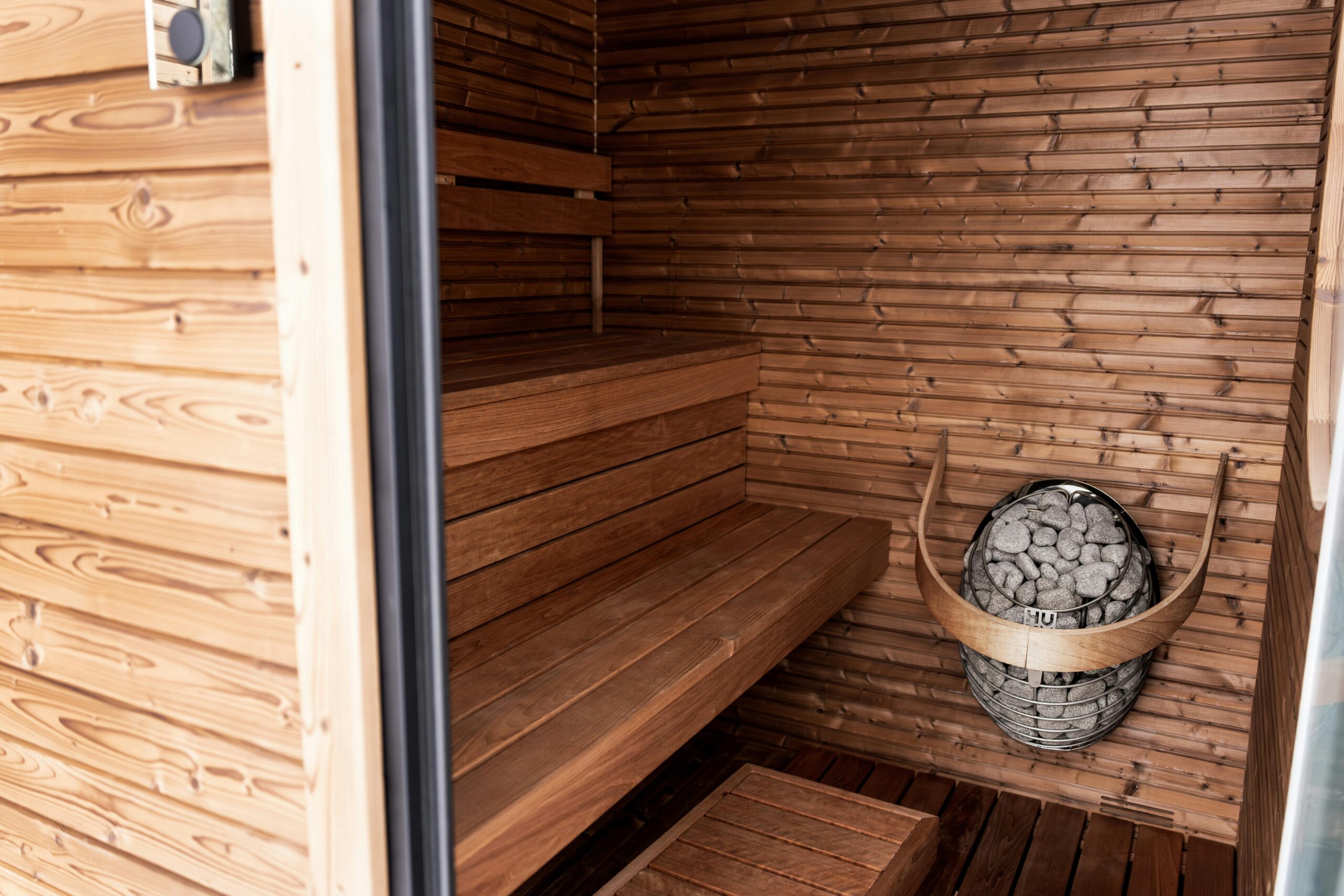
Picture stepping into soothing heat after a cold Calgary winter evening. Snow outside. Warm cedar surroundings inside. No notifications. No screens. No rush.
Just quiet.
That moment alone explains why sauna routines often become habits people keep for years.
WHY PEOPLE USE SAUNAS IN THE FIRST PLACE
Before talking about how long you should use a sauna, it helps to understand why people use saunas at all.
Saunas expose your body to controlled heat. Your heart rate increases. Your body temperature rises. Sweating begins naturally. Many people describe the experience as calming, grounding, and restorative.
People commonly use saunas for:
- Relaxation
- Stress management
- Muscle recovery
- Post-workout recovery
- Better sleep routines
- Mobility and flexibility support
- Quiet screen-free time
- Cold weather comfort
- Building wellness habits
Some people finish a workout with a sauna session. Others use sauna time as part of an evening wind-down routine. Some couples use it as time to reconnect without distractions.
The goal is not perfection. The goal is consistency.
Experts and wellness trends continue pointing toward recovery habits becoming just as important as exercise itself. Sauna routines are increasingly becoming part of that bigger wellness picture.
HOW LONG SHOULD YOU STAY IN A SAUNA?
For beginners, simplicity wins. A safe starting guideline will look like this:
- A beginner should stay in a sauna for 5-10 minutes.
- If you are building tolerance, you should stay in for 10-15 minutes.
- Experienced users can stay in for 15-20 minutes.
- Advanced users up to 20-30 minutes.
If you are new to sauna use, start at the lower end. Your body needs time to adapt. Many beginners assume staying longer means getting better results. It does not.
Think about exercise. Someone who has never run before does not start with a marathon. Heat exposure works the same way. Your body gradually builds comfort and tolerance over time.
At RnR Hot Tubs and Spas, we encourage beginners to focus on one thing: comfort first.
- If five minutes feels right, five minutes is enough.
- If ten minutes feels comfortable after several weeks, build gradually.
Sauna wellness is not about competition. It is about creating routines that make you feel refreshed rather than exhausted.
Start Slow and Build Gradually
Your first sauna session should feel approachable. Not intense. Not overwhelming. A simple beginner progression might look like:
Week One
- 5–8 minute sessions
- Two to three times per week
- Moderate temperatures
Week Two
- 8–12 minute sessions
- Add cooling periods afterward
- Focus on hydration
Week Three and Beyond
- Work gradually toward 15–20 minutes
- Adjust based on comfort
- Build consistency over intensity
Pay attention to how your body responds. Heat affects everyone differently.
Age, fitness level, hydration status, stress levels, and even for women, your time of the month can influence how comfortable sauna sessions feel. Your body will tell you what works. Listen to it.
DIFFERENT SAUNA TYPES CHANGE THE EXPERIENCE
Not every sauna feels the same. The amount of time you stay inside often depends on the sauna style.
Traditional Saunas
Traditional saunas use heated rocks or electric heaters to warm the surrounding air. Typical temperature range:
150°F–195°F (65°C–90°C)
The heat feels stronger and more immediate. Beginners often start with shorter sessions. Typical timing:
10–20 minutes
Traditional saunas create that classic sauna experience many people imagine: deep warmth, gradual sweating, and a cozy atmosphere that feels especially welcome during Canadian winters.
Infrared Saunas
Infrared saunas operate differently. Instead of heating the surrounding air as intensely, infrared technology heats the body more directly. Typical temperatures:
120°F–150°F (49°C–65°C)
Many beginners find infrared easier to tolerate because the surrounding air feels less aggressive. Typical session timing:
15–30 minutes
Industry trends also show infrared sauna growth continuing as homeowners seek wellness solutions that integrate more easily into residential spaces.
Outdoor Barrel Saunas
Outdoor saunas deliver an experience many homeowners absolutely love. Warm cedar air. Fresh outdoor temperatures.
The contrast between the heat and cool Canadian air. It feels restorative in a way that indoor experiences sometimes cannot match.
Outdoor sauna owners often combine sauna sessions with:
- Backyard seating areas
- Hot tubs
- Swim spas
- Cold plunge systems
- Privacy landscaping
That full backyard wellness environment continues to become one of the most requested lifestyle upgrades homeowners explore.
SIGNS YOU HAVE BEEN IN THE SAUNA FOR TOO LONG
Your body usually gives warning signs. Pay attention.
Exit immediately if you experience:
- Dizziness
- Nausea
- Headaches
- Extreme fatigue
- Feeling faint
- Rapid heartbeat discomfort
- Trouble breathing
- Lightheadedness
Heat wellness should feel calming. Not overwhelming.
If you feel uncomfortable:
- Exit the sauna slowly
- Cool down gradually
- Drink water
- Rest before attempting another session
Pushing through discomfort does not create better wellness outcomes. It creates bad experiences. Let’s talk about why hydration matters more than you may realize.
Sweating is part of sauna use. Sweating also means fluid loss. Even short sessions can increase dehydration risk if you are not paying attention.
Before sauna use:
- Drink water beforehand
- Avoid entering dehydrated
- Avoid alcohol before sessions
After sauna use:
- Rehydrate gradually
- Replace fluids consistently
- Consider electrolytes if needed
Hydration sounds simple. But it is one of the biggest beginner mistakes people make. Think of hydration like fuel in a vehicle. Even the best engine struggles without it.
Building a Backyard Wellness Space with RnR Hot Tubs and Spas
Wellness at home is not just about convenience anymore. It is about creating intentional space. A place where recovery feels easy.
Relaxation feels natural. And routines become sustainable.
More homeowners are combining:
- Saunas
- Hot tubs
- Swim spas
- Cold plunge systems
- Outdoor seating
- Privacy landscaping
- Recovery-focused backyard designs
Home wellness trends continue growing as people prioritize experiences that support physical wellness, mental health, and recovery without leaving home.
We love helping homeowners build spaces that fit real lifestyles, which is part of what matters most. Because wellness should feel accessible. Not complicated.
Sauna wellness is not about endurance. It is not about pushing limits. It is not about chasing extreme temperatures. It is about creating intentional time to recharge.
A simple beginner framework works beautifully:
- Start with 5–10 minutes
- Build toward 15–20 minutes gradually
- Stay hydrated
- Listen to your body
- Focus on consistency
The best sauna routine is the one you actually enjoy enough to keep doing. For some people, sauna time becomes post-workout recovery. For others, it becomes a quiet morning reflection.
For many Canadian homeowners, it becomes one of the most valued wellness features in their entire home.
If you are exploring ways to build your own wellness retreat, RnR Hot Tubs and Spas can help you find options that fit your space, goals, and lifestyle. Because wellness should feel relaxing. Not complicated.
You can visit us at Bay 8 – 5700 Barlow Trail SE in Calgary.
Servicing all makes and models, including Vita Spa, American Whirlpool, and Maax Spas.
Now servicing Calgary, Airdrie, Strathmore, Okotoks, High River, Chestermere, Invermere, Banff, Canmore, Radium, Golden, and the surrounding areas.
January 7, 2026
Leave a Reply Cancel reply
Copyrighted @2030 | Created with Showit
Navigate
Bay 8 - 5700 Barlow Trail SE
Calgary, AB T2C 0B1
@rnrhottubs_spas
info@rnrhottubs.com
Contact us
join the list
Be the first to comment